1 This group of elements is made up of all different states of matter solid liquid and gas a Nonmetals b Metals c Metalloids 2 These elements always have a shiny luster a Nonmetals b Metals c Metalloids 3 These elements are located in a stair step pattern on the periodic table a Nonmetals b Metals c Metalloids 4 Elements in this group are good conductors of heat AND electricity a Nonmetals b Metals c Metalloids 5 This tells you. Metals Nonmetals and Metalloids Using the periodic table you can classify the elements in many ways.
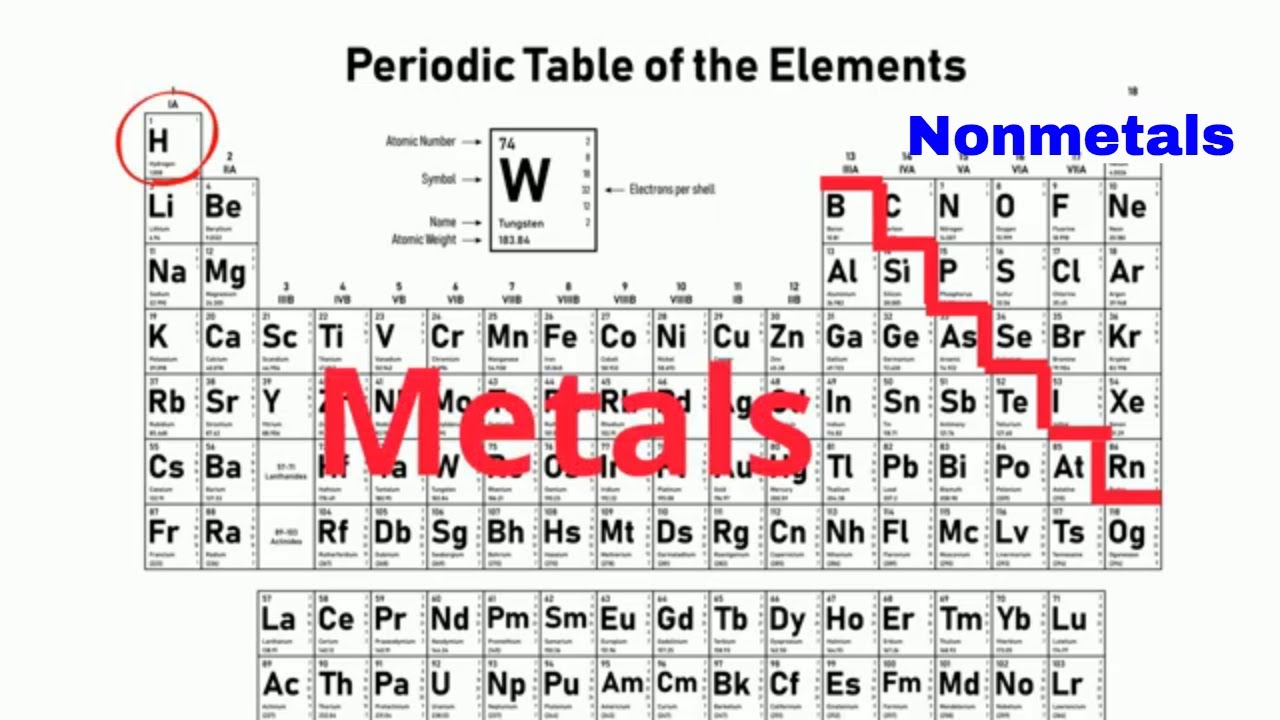
How To Identify Metals Nonmetals And Metalloids On The Periodic Table Youtube
Nonmetals are found in s and p blocks.

Periodic table with metals metalloids and nonmetals. Non-metals are grouped on the right side of the periodic table. These elements are called metalloids or. Metalloids are found in the middle of the periodic table.
Metals Nonmetals Metalloids - Maze chase. Your essay must have an introduction 1 paragraph a body 3 paragraphs and a conclusion 1 paragraph. Some elements between the metals and non-metals in the periodic table have properties which are a mixture of the properties of metals and non-metals.
Metals are found in the left side of the periodic table. Metals Metalloids and Nonmetals Essay Compare and contrast the three different types of elements using their physical properties and explain how you are able to determine if an element is a metal nonmetal or metalloid. This is an online quiz called Periodic Table Metals NonMetals and Metalloids There is a printable worksheet available for download here so you can take the quiz with pen and paper.
Elements are further classified into metals non-metals and metalloids based on their properties which are correlated with their placement in the periodic table. They form a separating boundary between the metals and nonmetals. Metalloids straddling the metal-nonmetal border are mostly distinct from either but in a few properties resemble one or the other as shown in the shading of the metalloid column below and summarized in the small table at the top of this section.
Position in the Periodic Table. According to their shared physical and chemical properties the elements can be classified into the major categories of metals metalloids and nonmetals. What is Carbon.
SOLIDS LIQUIDS or GASSES What makes up most of the periodic table What is the classification of these characteristics. Block in the Periodic Table. On a standard periodic table all eleven elements are in a diagonal region of the p-block extending from boron at the upper left to astatine at lower right.
The metals are to the left of the line except for hydrogen which is a nonmetal the nonmetals are to the right of the line and the elements immediately adjacent to the line are the metalloids. Some authors count metalloids as nonmetals with weakly nonmetallic properties. When elements combine to form compounds there are two major types of bonding that can result.
Metals are grouped on the left side of the periodic table with an exception of a hydrogen atom. The line begins at boron B and extends down to polonium Po. Search Help in Finding Periodic Table Metals NonMetals and Metalloids - Online Quiz Version Periodic Table Metals NonMetals and Metalloids online quiz.
Metals left side of a period generally have a lower electron affinity than nonmetals right side of a period with the exception of the noble gases. In other words metalloids semimetals are located on the right side of the post transition metals and on the left side of nonmetals see above image. Some periodic tables include a dividing line between metals and nonmetals and the metalloids may be found close to this line.
Also many periodic tables have a stair-step line on the table identifying the element groups. On many periodic tables a jagged black line see figure below along the right side of the table separates the metals from the nonmetals. Also include the location of the elements on the periodic table.
Where at the metalloids located on the Periodic Table. A description and practice of finding metals nonmetals and metalloids on the Periodic TableIn general metals are found on the left-hand side of the period. Elements of the periodic table are grouped as metals metalloids or semimetals and nonmetals.
Can a metalloid have properties of metals and nonmetals. One useful way is by metals nonmetals and metalloids. Nonmetals are found in the right side f the periodic table.
There are 118 elements known to us out of which 92 are naturally occurring while the rest have been prepared artificially. Where are metals located on the periodic table Most metals are. And metalloids are the borderline.
Authors differ in where they divide metals from nonmetals and in whether they recognize an intermediate metalloid category. Metalloids are located between the metals and nonmetals. The metals are found on the left and the nonmetals are found on the right.
The orange color on the Periodic table represents metalloids. The periodic table is organized in families and periods. Metals are located in s p d and f blocks.
The metalloids separate the metals and nonmetals on a periodic table. Learn about the metals nonmetals and metalloids and the periodic table.
4 Properties Of Metals Non Metals And Metalloids Flux Science
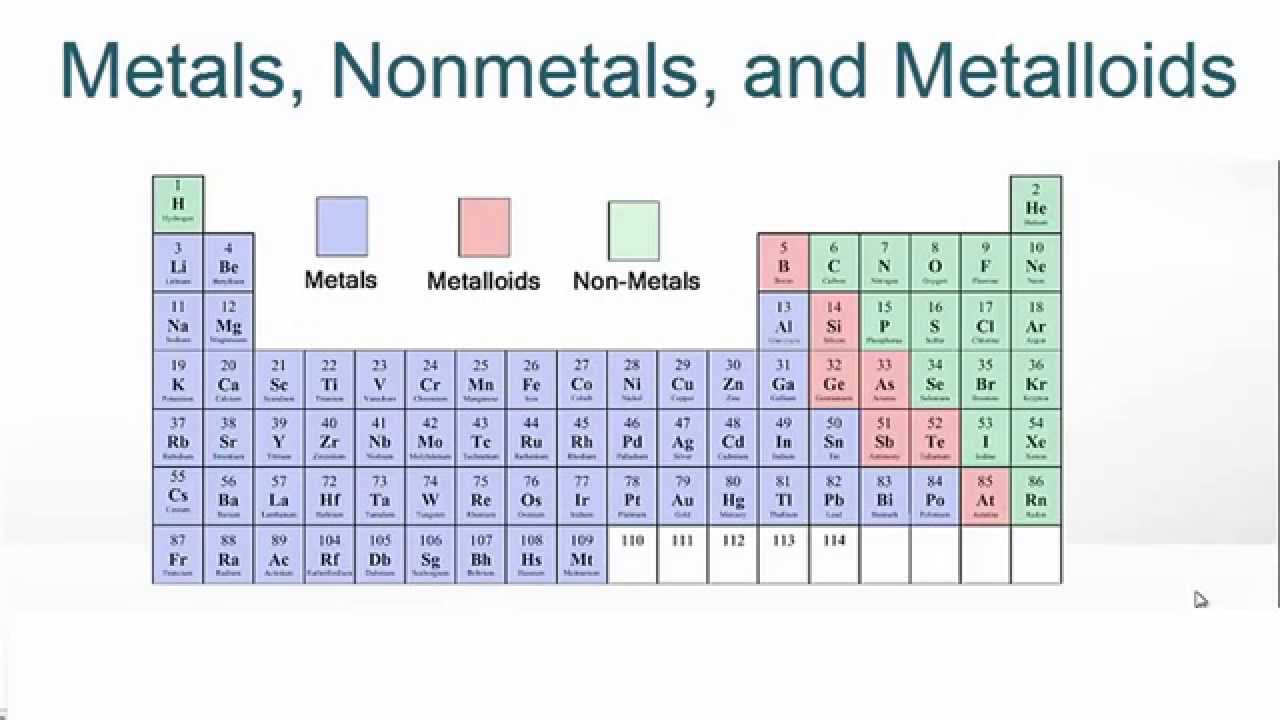
Metals Nonmetals And Metalloids On The Periodic Table Youtube
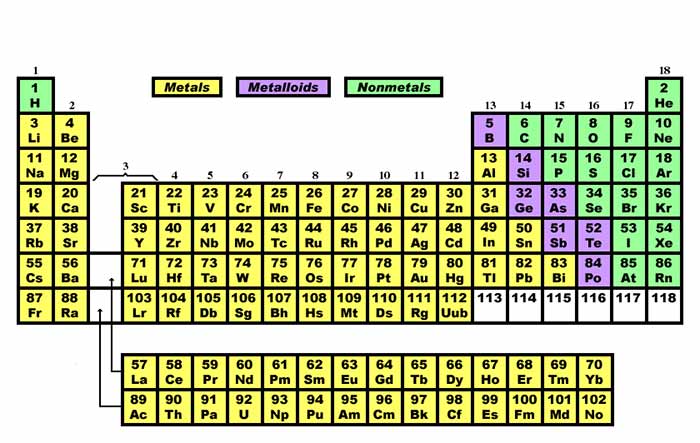
Matter And Energy Metals Nonmetals And Metalloids Texas Gateway

Metals Metalloids And Nonmetals Element Classification Groups

Periodic Table Showing Metals Metalloids And Non Metals Download Scientific Diagram